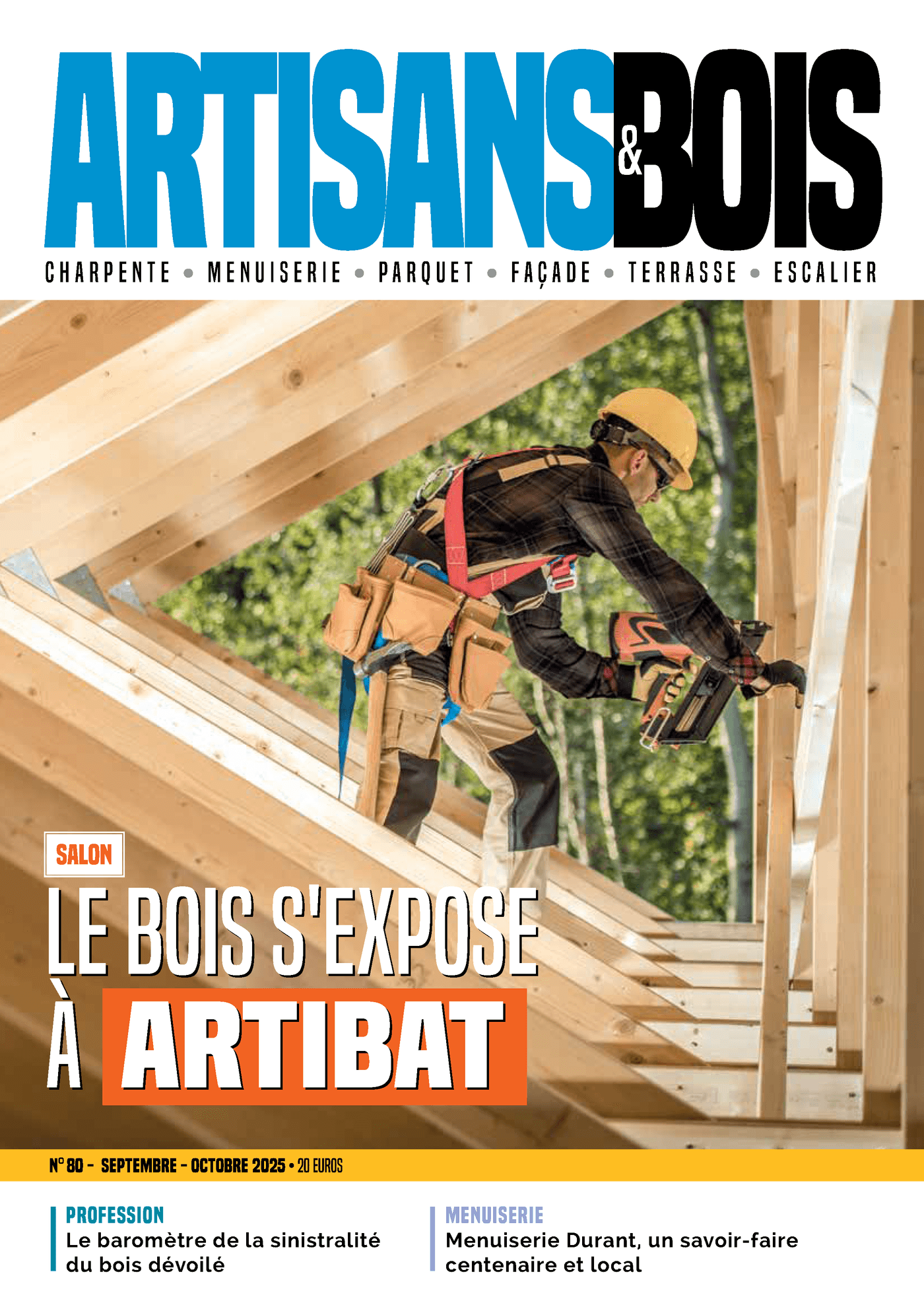
Artisans et Bois n°80
LE NUMERIQUE AU SERVICE
DE TOUS LES METIERS DU BOIS
Longtemps associé aux grands groupes du BTP, aux projets d’envergure ou aux bureaux d’études, le numérique part à l’assaut des petites entreprises de la filière. Autrefois redouté ou totalement ignoré par les plus petits faiseurs, il descend peu à peu à l’échelle des ateliers et des chantiers de proximité. Logiciels de dessin ou de calcul simplifiés, outils de CFAO, plateformes BIM plus intuitives… les solutions s’affinent et gagnent en ergonomie. Les artisans sont aujourd’hui en mesure de modéliser une structure complexe, de vérifier la faisabilité d’un assemblage, d’optimiser des découpes ou d’anticiper les
besoins en matière.
Loin de dénaturer les métiers ou d’appauvrir les compétences, tous ces outils 2.0 les prolongent. Le numérique se limitant à éliminer les marges d’erreur, sécuriser les choix techniques et libérer du temps pour ce qui fait la valeur d’un artisan du bois : la qualité de son travail, la précision du geste et la relation avec le client. Dans ce numéro, les interviews de deux spécialistes du secteur (Dlubal et TopSolid) illustrent cette tendance avec, d’un côté, des logiciels capables de dimensionner et de simuler le comportement du matériau selon les normes les plus exigeantes et de l’autre, des solutions de CFAO intégrées qui accompagnent le professionnel du dessin à l’usinage. Deux approches différentes, pour une promesse identique : rendre le numérique accessible, pertinent et utile, même à l’échelle d’une structure modeste. L’enjeu pour les années à venir ? Que les artisans s’approprient ces outils sans les subir. Non pas pour suivre une mode, mais pour rester compétitifs, fiabiliser leurs projets et révéler tout le potentiel du bois.
Le numérique n’est plus réservé aux « grands », il devient une ressource
disponible et adaptée au quotidien des petites entreprises.
Adèle cazier